Many people who encounter traditional woodworking adhesives eventually ask a simple but interesting question: Is hide glue just gelatin? At first glance, the two substances appear extremely similar. Both are derived from animal collagen, both dissolve in hot water, and both form a gel when cooled. Because of these similarities, some assume that hide glue and gelatin are essentially the same material.
However, while hide glue and gelatin share the same biological origin, they are not identical products. Differences in processing methods, purity levels, additives, and intended applications make them distinct materials with different properties and uses.
This article explains what hide glue and gelatin are, how they are produced, their similarities and differences, and why hide glue remains an important adhesive in many industries today.
What Is Hide Glue?
Hide glue is a natural adhesie derived from animal collagen, typically extracted from animal hides, skins, and connective tissues. It has been used for centuries as a reliable bonding material, particularly in woodworking, furniture making, musical instrument construction, and bookbinding.
The production process generally involves several steps:
- Raw Material Preparation
Animal hides or skins are cleaned to remove fats, hair, and impurities. - Collagen Extraction
The material is soaked and heated in water to extract collagen proteins. - Hydrolysis
Controlled heating breaks down collagen into smaller protein chains. - Filtering and Concentration
The liquid glue is filtered and concentrated. - Drying
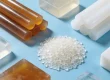
The final product is dried into sheets, granules, or flakes.
To use hide glue, it is typically heated in water to around 60–70°C (140–160°F) until it forms a liquid adhesive that can be applied to surfaces.
Once cooled, hide glue forms a strong but reversible bond, which is one reason it remains highly valued in restoration work.
What Is Gelatin?
Gelatin is also derived from animal collagen, usually sourced from pig skin, cattle bones, or animal hides. However, gelatin is processed and purified for food, pharmaceutical, and cosmetic applications rather than industrial bonding.
Common uses of gelatin include:
- Food products such as desserts, gummies, and marshmallows
- Capsules for medicines
- Stabilizers in dairy products
- Cosmetic formulations
- Photography and film production
Because gelatin is intended for consumption or sensitive applications, it undergoes much stricter purification and quality control than hide glue.
The final product is typically a colorless or pale powder or sheet that dissolves in warm water and forms a gel when cooled.
Why Hide Glue and Gelatin Look Similar
The reason hide glue and gelatin resemble each other so closely is simple: both originate from collagen, the primary structural protein found in animal connective tissue.
Collagen molecules break down during hydrolysis into smaller protein chains that can dissolve in hot water and form gels when cooled. This shared chemistry explains several similarities between hide glue and gelatin.
Common Characteristics
Hide glue and gelatin both:
- Are derived from animal collagen
- Dissolve in hot water
- Form a gel when cooled
- Are biodegradable
- Contain protein-based polymer chains
Because of these similarities, early glue makers and food producers often used very similar manufacturing techniques.
Key Differences Between Hide Glue and Gelatin
Although hide glue and gelatin share a common origin, several important differences separate them
1. Purity
Gelatin undergoes extensive purification because it is intended for food and pharmaceutical use.
Hide glue, on the other hand, may contain small amounts of natural impurities because its purpose is industrial bonding rather than consumption.
2. Processing Methods
Gelatin is produced with carefully controlled chemical and filtration processes to ensure safety, clarity, and neutral taste.
Hide glue production focuses on adhesive strength and viscosity, which means the process may prioritize performance over purity.
3. Additives
Hide glue formulations may include additives to adjust:
- Viscosity
- Gel time
- Shelf stability
- Application temperature
Gelatin used in food products usually contains minimal additives.
4. Intended Applications
The biggest difference lies in their applications.
Hide glue is used in:
- Woodworking
- Furniture restoration
- Musical instrument construction
- Packaging
- Bookbinding
Gelatin is used in:
- Food products
- Pharmaceutical capsules
- Cosmetics
- Photography
5. Strength and Performance
Hide glue is specifically formulated to function as an adhesive. It offers:
- Strong bonding to porous materials
- Good initial tack
- Heat reversibility
- Compatibility with wood fibers
Gelatin, while chemically similar, is not optimized for bonding applications.
Can Gelatin Be Used as Glue?
Technically, gelatin can function as a weak adhesive because it contains the same protein structure as hide glue. Historically, homemade glues were sometimes made using gelatin.
However, gelatin generally performs poorly compared to true hide glue for several reasons:
- Lower bonding strength
- Less consistent viscosity
- Reduced durability
- Greater sensitivity to moisture
For serious woodworking or manufacturing tasks, hide glue remains the superior choice.
Why Hide Glue Is Still Used Today
Despite the availability of modern synthetic adhesives such as PVA and epoxy, hide glue continues to play an important role in certain industries1. Reversible Bonds
Hide glue joints can be reversed with heat and moisture, making it ideal for:
- Antique furniture restoration
- Musical instrument repair
- Museum conservation
2. Excellent Wood Compatibility
Hide glue penetrates wood fibers effectively, creating strong bonds in:
- Cabinets
- Veneers
- Joinery
3. Natural and Biodegradable
As a protein-based adhesive, hide glue is:
- Renewable
- Biodegradable
- Environmentally friendly
4. Strong Initial Tack
Hide glue grabs surfaces quickly, which helps hold components in place during assembly.
Different Types of Hide Glue
Hide glue is available in several forms depending on the application.
Hot Hide Glue
Traditional granules or flakes that must be heated before use.
Liquid Hide Glue
Modified with additives so it can remain liquid at room temperature.
Industrial Animal Glue
Used in manufacturing processes such as:
- Paper converting
- Packaging
- Bookbinding
- Rigid box production
Limitations of Hide Glue
Although hide glue has many advantages, it also has several limitations.
Moisture Sensitivity
Hide glue is not waterproof, which means it may weaken in humid environments.
Heat Requirements
Traditional hide glue must be heated before application.
Limited Open Time
The adhesive begins to gel quickly as it cools, requiring efficient assembly.
Final Verdict: Is Hide Glue Just Gelatin?
The short answer is no. Hide glue and gelatin are closely related because they both come from animal collagen, but they are processed and optimized for completely different purposes.
Gelatin is designed for food, pharmaceutical, and cosmetic uses, while hide glue is specifically engineered to function as a strong, reliable adhesive.
Think of them as two products made from the same raw material but refined for different industries.
Understanding this distinction helps explain why hide glue remains valuable in woodworking, restoration, and manufacturing even in the modern age of synthetic adhesives.
High-Quality Animal Glue for Industrial Applications
If you are looking for reliable animal glue for packaging, bookbinding, or rigid box manufacturing, Go Gluing provides high-quality animal glue with consistent viscosity, strong bonding performance, and stable production quality.
Our products are widely used in industries such as gift boxes, hardcover books, photo albums, and paper converting.
Contact us today to learn more about our adhesive solutions.
Email: info@gogluing.com
FAQ
Is hide glue made from gelatin?
Hide glue and gelatin are both derived from collagen, but hide glue is processed for adhesive applications rather than food use.
an gelatin replace hide glue?
Gelatin can act as a weak adhesive, but it lacks the strength and durability of true hide glue.
Why does hide glue gel when it cools?
Hide glue contains protein chains from collagen that naturally form a gel structure when temperature decreases.
What temperature is needed to use hide glue?
Traditional hide glue is typically applied at temperatures between 60–70°C (140–160°F).