Polyvinyl acetate glue—better known as PVA glue—is a staple in homes, workshops, schools, and factories. Whether you’re crafting with paper, building a book, fixing wood, or sealing drywall, PVA glue is probably the product in your toolbox doing the hard work. But what is pva glue? How does it work? And why is it trusted across so many industries?
This article provides a comprehensive guide to PVA glue—its origins, composition, advantages, disadvantages, and expert usage tips.
What Is PVA Glue?
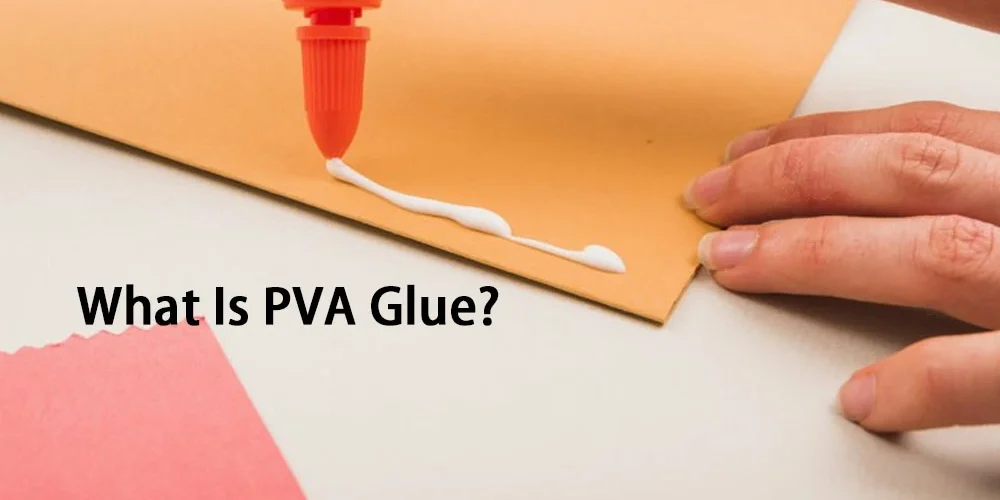
PVA glue stands for polyvinyl acetate glue. In chemical terms, PVA refers to a synthetic polymer made from repeating vinyl acetate units, represented by the formula (C4H6O2)n. It is a synthetic adhesive that forms strong bonds with porous materials like wood, paper, and fabric. It’s also commonly known as white glue, wood glue, or school glue.
PVA glue is:
- Water-based
- Non-toxic
- Flexible when dry
- Clear-drying
- Safe for indoor use
Because it does not contain harsh chemicals or solvents, it has become a favorite for both professional craftsmen and school-aged children.
Below are its most important chemical properties:
- Polymer base: Polyvinyl acetate
- Formula: (C4H6O2)n
- pH: Neutral (safe for paper and fabrics)
- Glass transition temperature: 30°C to 45°C
- Drying time: Initial bond in 20–30 minutes; full cure in 24 hours
- Toxicity: Safe for skin contact, not meant to be ingested
What Makes Up PVA Glue?
The main ingredient in PVA glue is polyvinyl acetate itself. In addition to the polymer, manufacturers typically mix in:
- Water – acts as a solvent and carrier
- Plasticizers – improve flexibility
- Stabilizers – enhance shelf life and consistency
- Preservatives – prevent mold or bacterial growth
This water-based formula makes PVA glue safe, easy to clean, and suitable for use in a wide variety of environments, including classrooms and kitchens.
Historical Timeline of PVA
The story of PVA began in 1912. German chemist Fritz Klatte first made polyvinyl acetate that year. Commercial production started in the 1930s. Early makers sold the polymer mainly for coatings and paints. Woodworkers and bookbinders adopted PVA in the 1940s. They prized its clear finish and strong hold. Schools and homes embraced PVA in the 1960s. At that point, manufacturers marketed PVA glue as a safe, easy-to-use craft adhesive.
How PVA Glue Bonds Materials
PVA glue works by soaking into porous surfaces. When users press two coated parts together, the polymer chains interlock within the material’s pores. As the water evaporates, the polymer particles join into a single, continuous mass. This fusion creates a bond that often exceeds the strength of the wood or paper itself.

Types of PVA Glue
Manufacturers make PVA glue in different formulas to suit specific jobs. The two main types are white PVA glue and yellow PVA glue.
White PVA Glue
White PVA glue, often called “school glue” or “craft glue,” works well for paper, cardboard, and light wood projects. Its white color dries clear, and its milky appearance in the bottle does not affect the final look.
Common Uses:
- Paper crafts and scrapbooking
- School art projects
- Light woodworking where water resistance is not required
- Paperboard and cardboard assembly
Benefits:
- Affordable and widely available
- Easy to spread with a brush or spreader
- Safe for children’s crafts
Yellow PVA Glue
Yellow PVA glue, commonly known as carpenter’s glue, offers stronger bonds and better water resistance. This formula contains aliphatic resins blended with polyvinyl acetate. Professional woodworkers choose yellow PVA glue for furniture, cabinetry, and outdoor trim.
Common Uses:
- Furniture assembly and cabinetmaking
- Hardwood flooring installation
- Outdoor woodwork (in some waterproof variants)
Benefits:
- Higher initial tack for tighter joints
- Better moisture resistance than white PVA
- Stronger bond suited for load-bearing applications
Special Formulas of PVA Glue
Some PVA products are tailored for specific uses:
- Bookbinding PVA – flexible and long-lasting
- Fabric PVA – washable and soft
- Fast-Drying PVA – quick set time for fast-paced projects
- Waterproof PVA – for outdoor or high-moisture areas
Choosing the right formulation depends on your project’s materials, environment, and durability needs.
Choosing the Right PVA Glue
When selecting a glue, think about:
- What materials you’re bonding
- Whether you need fast drying
- If water resistance is important
- Your working environment (indoor vs outdoor)
If you’re unsure, start with general-purpose white PVA glue and test it on a small area.
How to Use PVA Glue Properly
Whether you’re gluing paper or building a chair, proper technique ensures the best results.
How to Glue Wood with PVA:
- Dry fit the parts: Ensure all parts align properly.
- Apply the glue: Use a thin, even coat on both surfaces.
- Press together: Move the pieces slightly to spread the glue and remove air pockets.
- Clamp: Use clamps to hold the pieces tightly together.
- Wipe excess glue: Remove any squeezed-out glue before it dries.
- Let it dry fully: Wait 24 hours for the strongest bond.
- Finish the surface: Sand any dried residue before painting or staining.
For porous materials like paper or cloth, use a brush or applicator to spread a thin coat. Always test a small area first, especially with fabrics.
Key Benefits of PVA Glue
Every successful adhesive requires a balance of properties. PVA glue delivers these key benefits:
- Strong bonding. The adhesive penetrates porous surfaces like wood fibers or paper, creating a joint that often exceeds the base material’s strength.
- Water-based formula. The absence of solvents ensures low volatile organic compound (VOC) emissions and eliminates harsh odors.
- Flexibility. Dried PVA joints can flex slightly under load, reducing the chance of brittle failure.
- Non-toxic chemistry. The typical PVA emulsion has a neutral pH and causes no irritation under normal use.
- Room-temperature setting. PVA cures as water evaporates; it sets fastest in well-ventilated, moderate-temperature environments.
However, users should keep in mind a few caveats:
- Water sensitivity. Standard PVA joints lose strength when soaked.
- Freeze–thaw vulnerability. If stored at below-freezing temperatures, the polymer emulsion can separate, rendering the glue useless.
- Drying time. Most formulations require at least 30 minutes to become tack-free and up to 24 hours to reach full bond strength.
Limitations of PVA Glue
Despite its strengths, PVA glue has some drawbacks:
- Moisture Sensitivity: Standard PVA glues are not waterproof. Prolonged water exposure can weaken bonds.
- Freeze Damage: If stored below 0°C (32°F), the polymer can break down, rendering the glue useless.
- Curing Time: Full bond strength can take 24 hours or more, depending on humidity and temperature.
- Biodegradation: Over time, fungi and bacteria can degrade PVA bonds in moist or organic-rich environments.
Users must consider these factors when selecting and storing PVA adhesives.

What Is PVA Glue Used For?
PVA (polyvinyl acetate) glue is prized for its strong, flexible bonds and ease of use on porous materials. Common applications include:
Woodworking & Carpentry
PVA glue seeps into wood fibers and, when clamped, creates a bond often stronger than the wood itself. Craftspeople use it for edge-gluing boards, assembling cabinets and frames, and repairing cracks by forcing adhesive into splits, then clamping until fully set.
Paper, Cardboard & Bookbinding
Because it dries clear and remains flexible, PVA is ideal for adhering paper layers, mounting cardstocks, book cover, and binding books. It secures signatures and endpapers without cracking, making it the standard in scrapbooking, card making, and archival bookbinding.
Fabric & Textile Work
Textile-grade PVA variants bond lightweight fabrics without stiffening. Crafters apply it for appliqué, costume hems, and home décor, while mills use it as a removable sizing agent to strengthen yarns during weaving and improve final fabric hand.
Arts, Crafts & Hobbies
Non-toxic and water-cleanable, PVA is the go-to adhesive for mosaics, papier-mâché, scale models, and envelope sealing. Its ease of use and safe cleanup make it a staple in schools, studios, and hobby shops.
Home Repair & Decorating
Mixed 50/50 with water, PVA makes an effective drywall primer that enhances paint and wallpaper adhesion. It also reattaches veneer and secures trim or molding, with excess wiped away cleanly or sanded flush once cured.
Industrial & Specialty Uses
In 3D printing, PVA serves as a water-soluble support material; in manufacturing, it acts as a binder for chewing gum and a sizing agent for textiles. It also enhances adhesion when added to cement or plaster and provides protective coatings in paper and packaging.
PVA Glue vs. Aliphatic Resin Glue
While both are woodworking adhesives, here’s how they differ:
| Feature | PVA Glue | Aliphatic Glue |
|---|---|---|
| Composition | Polyvinyl acetate | Aliphatic compounds |
| Water Resistance | Low to medium | High |
| Heat Resistance | Low | High |
| Color | White or clear | Yellow |
| Safety | Non-toxic | Can be mildly toxic |
| Best Use | Crafts, basic woodworking | Heavy-duty carpentry |
For home and craft projects, PVA is usually the better option. Aliphatic glue is stronger, but it’s less forgiving and harder to clean.
Conclusion
PVA glue is one of the most versatile and user-friendly adhesives available today. From school projects and woodwork to bookbinding and large-scale manufacturing, its ability to form strong, flexible, and safe bonds makes it a reliable choice across countless applications.
Whether you’re gluing paper, bonding wood panels, or producing thousands of notebooks or packages every day, selecting the right type of PVA glue is essential for achieving strong, durable, and clean results.
At GoGluing, we specialize in manufacturing advanced gluing machines designed for bookbinding, and notebook production. If your business relies on consistent, high-quality glue application, our machines are engineered to support your production line with precision, efficiency, and reliability.
Need help choosing the right gluing system for your project?
Feel free to contact the GoGluing team. We’re here to help you optimize every step of your adhesive process.

Try Our Gluing Machine Today!
Glue Smarter. Work Faster. Free Demo
FAQ
How long does it take PVA glue to dry?
PVA glue becomes touch-dry in 30 minutes but needs about 24 hours to cure completely.
Is PVA glue waterproof?
Standard PVA glue is not waterproof. Choose an exterior or water-resistant version if needed.
How to thin or remove PVA glue?
Thinning: Add a small amount of water to the glue, not the other way around. Mix thoroughly until you reach the desired consistency.
Removing from Wood: Let it dry, then sand it away.
Removing from Fabric: Soak in warm water and launder as usual.
Removing from Carpet: Scrub with warm water and use a vacuum cleaner to extract the loosened glue.
Is Elmer’s glue made from PVA?
Yes, Elmer’s Glue-All is a PVA-based glue. It uses polyvinyl acetate as the primary bonding ingredient, making it safe and effective for paper, wood, and crafts.
Are all Elmer’s glues made with PVA?
Most of Elmer’s glues are PVA-based, including their white school glue and wood glue. However, some specialty adhesives in their product line may contain other formulations depending on the intended use.